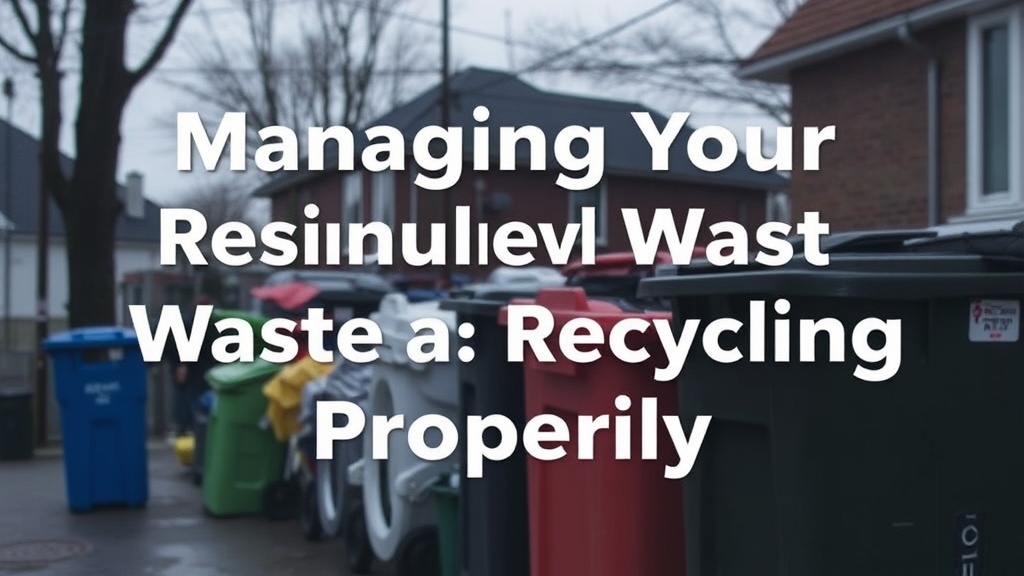
Managing Your Longueuil Residential Waste and Recycling Properly

Over 60% of the household waste generated in our local municipalities could actually be diverted from landfills if sorted correctly. Living in Longueuil means being part of a massive community effort to keep our streets clean and our local environment healthy. We aren't just talking about throwing things in a bin; we're talking about how we manage our daily leftovers and packaging to ensure the city's collection services run smoothly. This guide covers the specific rules we all need to follow to keep our neighborhoods looking great.
How do I know what goes in the recycling bin in Longueuil?
One of the most common points of confusion for residents is the distinction between what's actually recyclable and what ends up in the trash. In Longueuil, the rules for the blue bin are quite specific. Cardboard, paper, and certain plastics are welcome, but you have to be careful. If you're living near the Saint-Lambert border or closer to the Vieux-Longueuil area, you've likely seen the different colored bins around our streets. To keep our local processing plants efficient, please avoid putting food-contaminated items like greasy pizza boxes into the blue bin. We want to avoid the high costs of sorting errors that impact our municipal budget.
For those living in the more residential sectors of Longueuil, remember that glass is a big part of our recycling stream. However, you shouldn't include broken ceramics or drinking glasses—that's a common mistake that can damage the machinery at the sorting facility. If you're unsure, checking the official Ville de Longueuil website is the best way to stay updated on current sorting standards. Our community thrives when we all follow these small steps together.
What are the rules for organic waste and compost in Longueuil?
Managing organic waste is a huge part of our local environmental responsibility. Many parts of Longueuil have specific collection schedules for organic matter (the brown bin). This includes food scraps, vegetable peels, and even coffee grounds. It's a great way to reduce the volume of what we send to the landfill, but we have to be smart about it. If you're living in an apartment building near the Longueuil–Université-de-Sherbrooke metro station, your building management might have different protocols, so always check with your concierge or building owner first.
We've noticed that many neighbors are still hesitant about using the green or brown bins for food scraps. The key is using a compostable bag or a small bin with a lid to keep things tidy. By separating our organic waste, we're contributing to a much cleaner Longueuil. This isn't just about being "green"; it's about the practical reality of how our city manages its waste streams and keeps our local parks and streets from smelling during the hot summer months.
How do I dispose of large items or hazardous waste in Longueuil?
We've all been there: you're cleaning out your basement or garage near Boulevard Montarville and realize you have an old mattress or a broken piece of furniture that simply won't fit in the regular bin. You can't just leave these on the curb! Longueuil has specific protocols for bulky items. Often, the city provides specific collection days or requires you to take these items to a designated eco-centre. Using the wrong method can lead to fines or, worse, littering in our beautiful local parks.
- Bulky Items: For furniture or large appliances, check the city's collection calendar.
- Hazardous Materials: Never put paint, batteries, or electronics in your regular trash. These require specialized handling to protect our local groundwater.
- Electronics: Small electronics often have specific drop-off points in the Longueuil area.
If you're struggling to find a place for an old old sofa, don't just leave it by the curb. It's better to call the municipal services directly or visit the Quebec environmental guidelines to see how the province manages these materials. Our community is much better off when we take the extra step to dispose of items properly.
One thing we should all keep in mind is the impact of improper disposal on our local infrastructure. When people leave heavy items on the street in Longueuil, it can block our sidewalks and affect the visibility of pedestrians. It also creates a visual mess that reflects poorly on our neighborhoods. Whether you're in the heart of the city or the more quiet outskirts, we all share the responsibility of maintaining our local environment.
The collection schedules in Longueuil can sometimes change due to holidays or extreme weather. I highly recommend downloading the local municipal app or signing up for the city's alert system. It's a lifesaver when you're trying to plan your weekly chores and want to make sure you don't miss the pickup day for your specific street. Staying informed helps us stay organized and keeps our neighborhoods clean and functional.