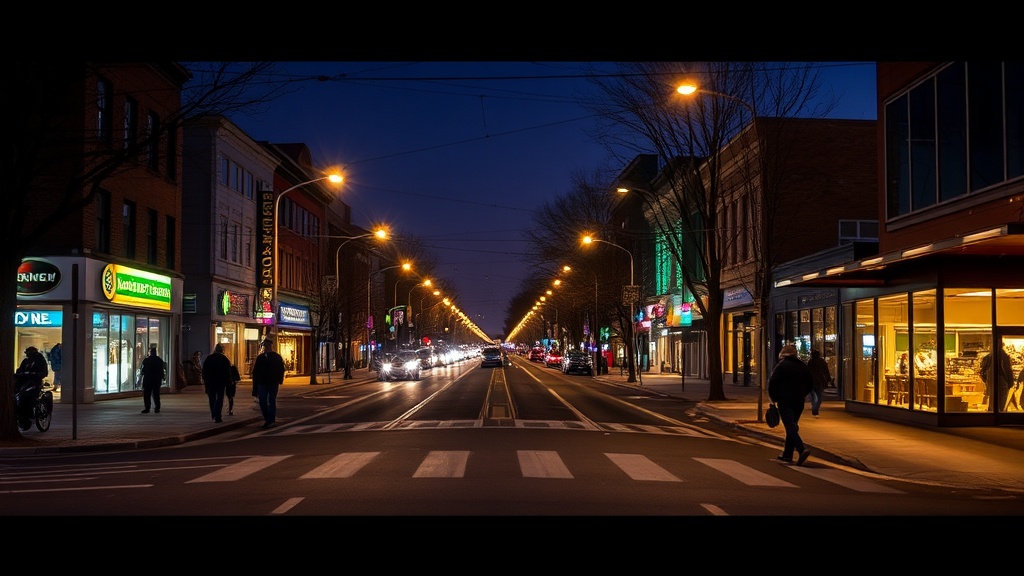
Longueuil's Undiscovered Heart: Beyond the Commuter's Glance

Many people view Longueuil simply as Montreal’s quieter neighbor, a convenient place to reside while working elsewhere, a city primarily defined by its proximity to the metropolis rather than its own merits. This common perception, however, misses something vital: Longueuil isn’t just a dormitory town, a mere stop on the metro line. It’s a municipality brimming with its own distinct character, deep historical roots, and an impressive collection of local gems waiting patiently to be unearthed. Far from being a passive recipient of Montreal’s overflow, Longueuil pulsates with an independent spirit, offering a rich array of experiences that are genuinely unique to its environment. This isn’t a guide to merely existing here; it’s an invitation—no, a challenge—to experience the true essence of Longueuil, exploring its vibrant local scene, peaceful green spaces, and surprising cultural offerings that define it as a destination in its own right. We’re going to look beyond the quick drive-through, past the highway exits, and discover what makes this city authentically Longueuillois, a place worthy of focused attention and appreciation.
What unexpected historical treasures lie hidden in plain sight?
Longueuil’s history isn’t confined to dusty archives or textbooks; it’s etched into the very fabric of its older neighborhoods, particularly Vieux-Longueuil. Strolling through these winding streets, you can’t help but feel a profound connection to centuries past, an almost palpable sense of the lives lived and stories told across generations. The most prominent—and frankly, stunning—example is the Co-Cathedral of Saint-Antoine-de-Padoue. Its magnificent, soaring spires and intricate facade are impossible to miss, standing as a proud testament to the city’s rich religious and architectural heritage. Completed in 1887, this grand structure isn’t just a place of worship; it’s a living museum, housing impressive works of art—from exquisite stained-glass windows depicting biblical scenes to detailed sculptures—and providing a serene space for quiet reflection right in the very heart of the city. Take a moment to step inside; the cool, hushed interior and its quiet grandeur often surprise and profoundly move first-time visitors, offering an immediate sense of historical gravitas.
But the city’s historical narrative doesn’t end with the cathedral’s impressive presence. Just a stone’s throw away, often nestled among more contemporary buildings, you’ll find other historical structures that eloquently tell tales of Longueuil’s formative years. Consider the various heritage homes scattered throughout Vieux-Longueuil, many of which are private residences, of course, but whose distinct architectural styles—from sturdy stone foundations to intricate Victorian detailing—offer invaluable glimpses into different eras of the city’s organic growth. We’re talking about structures that predate Confederation, some even hinting at the very earliest days of New France and subsequent Canadian settlement. They silently represent the quiet persistence of community, the gradual shaping of a city from a seigneurie into the dynamic municipality it is today. These buildings, often beautifully preserved, remind us that Longueuil has always been a place where people built lives, not just where they passed through. Exploring these areas on foot reveals a depth and character many assume only larger, older cities like Quebec or Montreal possess. This walk through history isn’t merely educational; it’s an experience that deepens your connection to the place. For those keen to learn more about Longueuil’s impressive architectural and cultural past, visiting the